From educator to analyst.
I became a math teacher because I believed every student could succeed, they just need the right support at the right time.
The hard part was figuring out what that support looked like.
In my third year in the classroom, I stopped guessing. I started tracking exactly where each student was on every standard, what they hadn't mastered yet, and what happened to their scores when I went back and re-taught it. The results were undeniable. Data is the difference between a student who falls behind in October and one who catches up by December.
I became obsessed with it. I tracked growth year over year. I looked for patterns no one else was looking for. And eventually I realized: I wasn't just teaching math anymore. I was doing data analysis.
So I decided to learn it properly.
I transitioned into EdTech operations, where I spent two years working on real data projects for organizations trying to understand how their technology was actually impacting students. I earned a Master's in Data Analytics alongside the Master's in Education I'd worked for as a teacher. And I kept seeing the same thing everywhere I went, schools and EdTech companies sitting on mountains of data, with no one to help them understand what it was telling them.
That's the gap Edalytics exists to close.
I work with schools and EdTech organizations as a fractional data analyst meaning you get the expertise of a dedicated data professional without the overhead of a full time hire. I know the classroom. I know the data. And I know how to translate one into the other in a way that actually changes what happens for students.
If your data is sitting unused, I'd love to talk.
Educator.
Data Analyst.
Builder.
Educator. Data Analyst. Builder.
Preview My Work
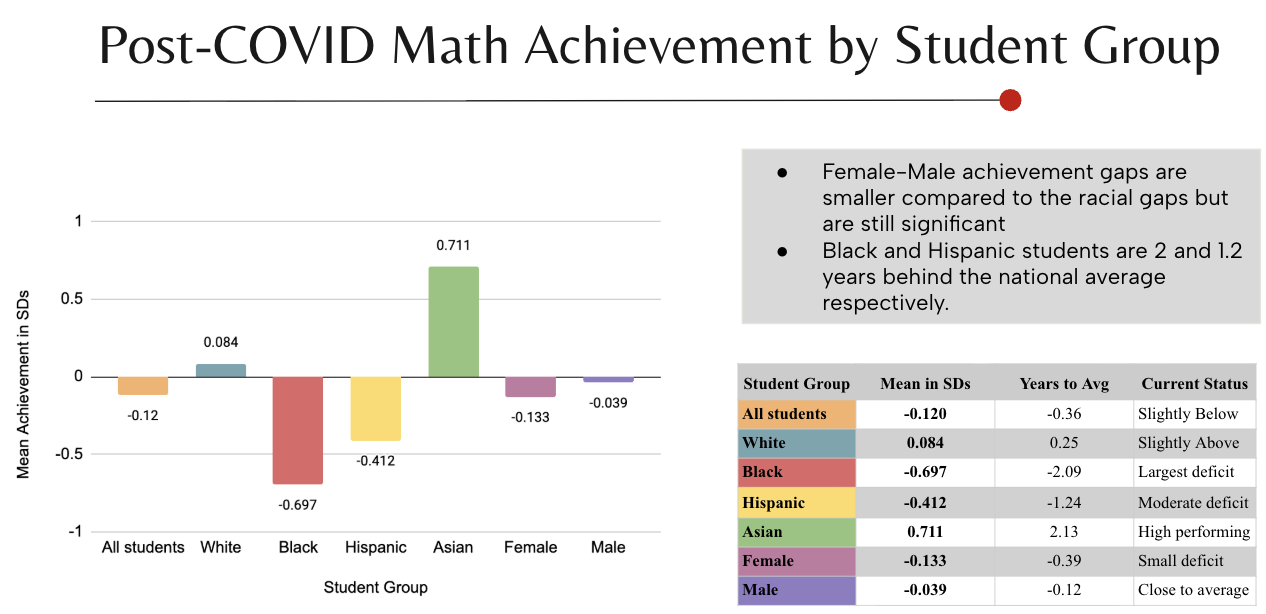
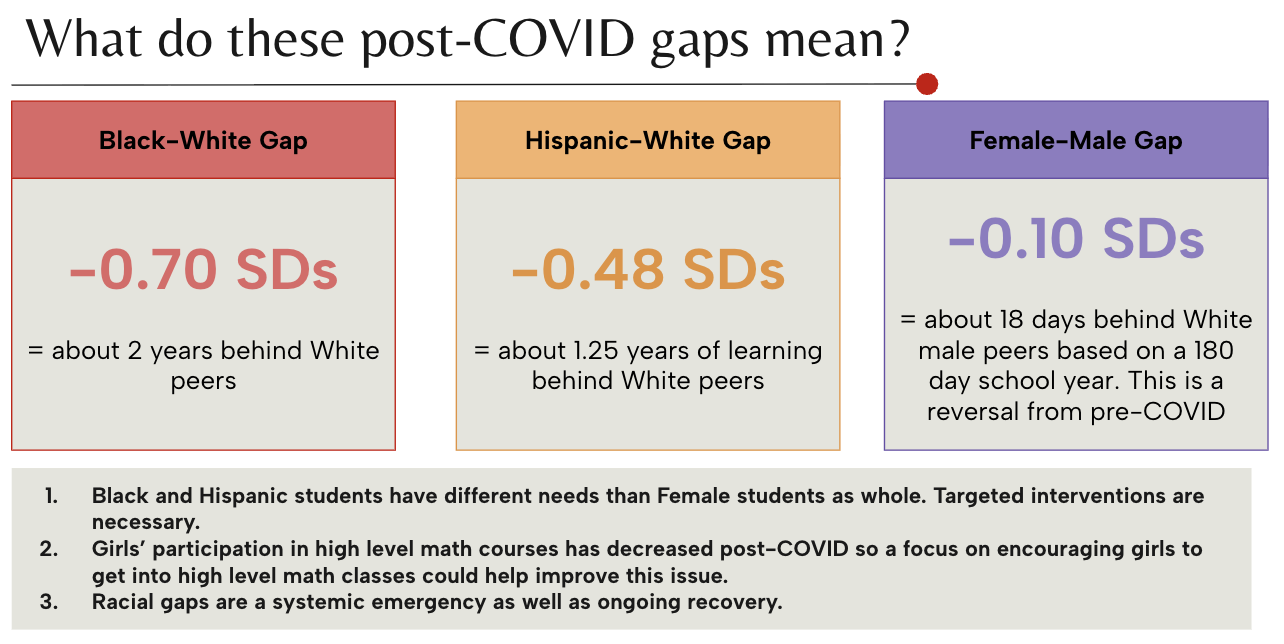
Post-COVID Math Achievement Gaps
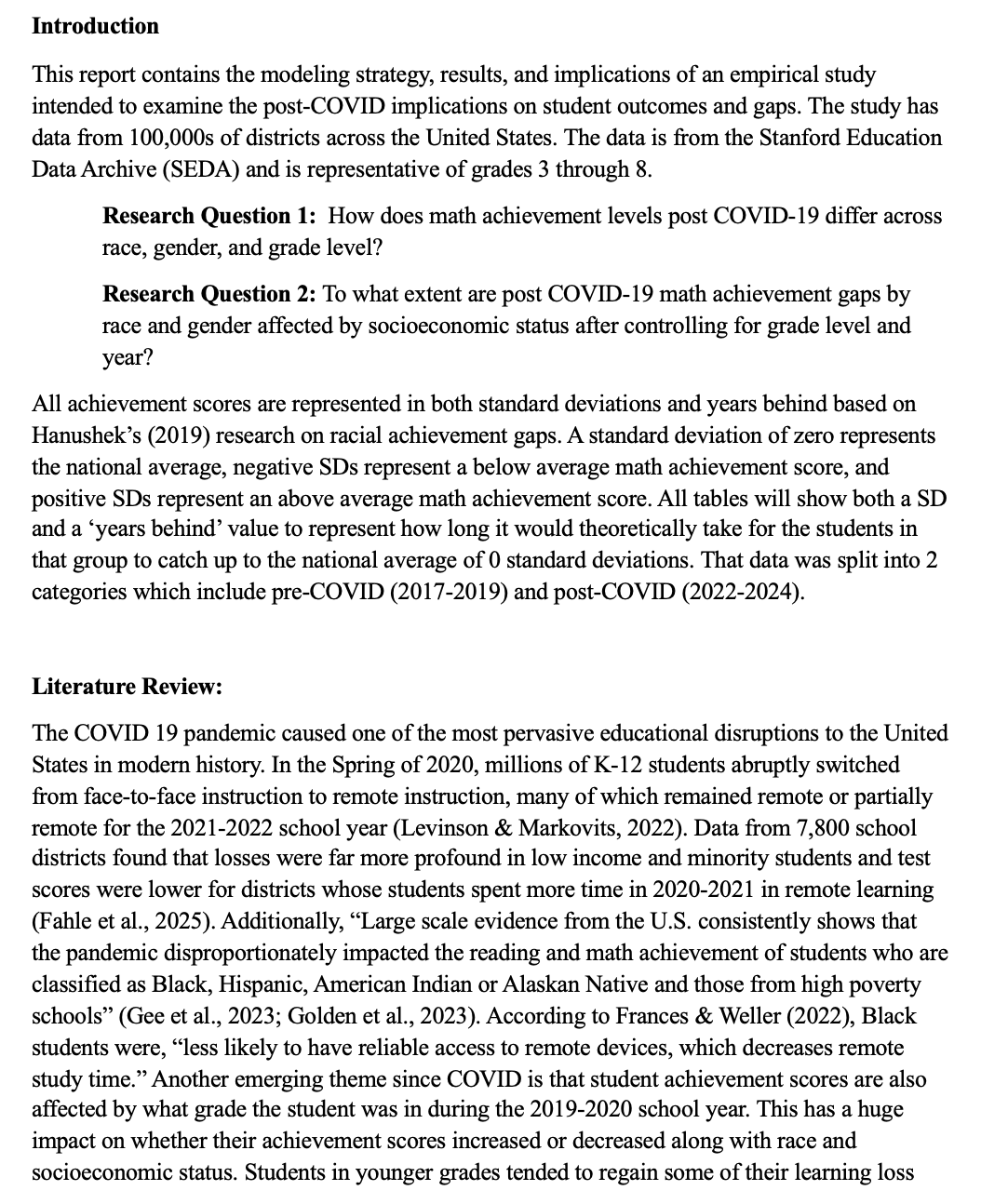
An examination of post-COVID math achievement based on race, gender, grade level, and socioeconomic status. Independent research using the Stanford Education Data Archive (SEDA), 100,000+ districts, grades 3–8
Dataset: Stanford Education Data Archive
One of the most alarming findings:
Black students are 2.09 years behind the national average in math post-COVID, a gap that widens at every grade level. This is the kind of information found in your data that I will use to provide insights that will in turn improve student outcomes in your shcool.